
11 min read
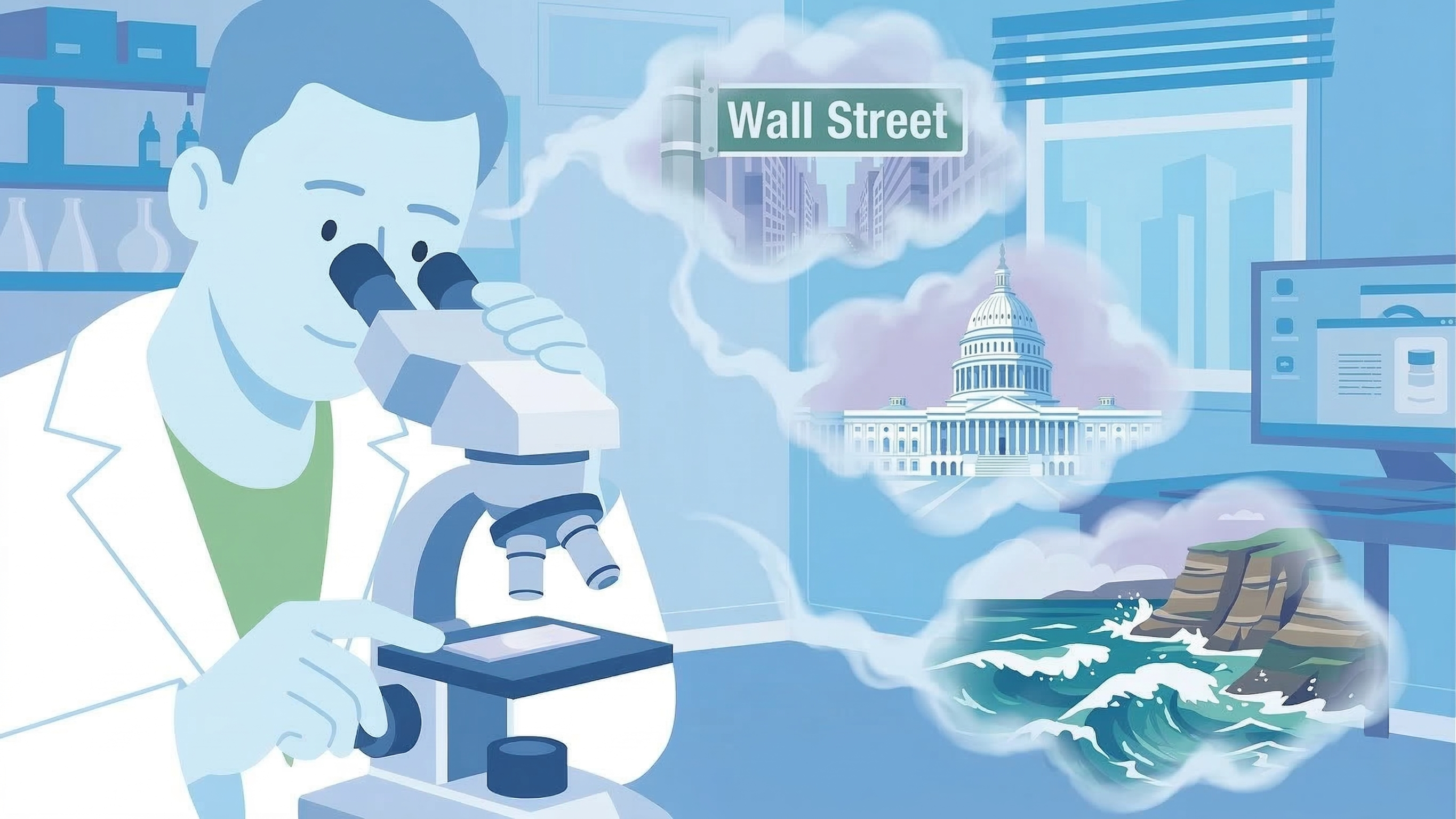
Each year brings with it new business challenges. That’s true in any industry, but we’re currently seeing a number of unique events converging that have affected drug development and manufacturing and that are poised to present altogether new challenges.
When we review The Antibody Society’s annual publication Antibodies to Watch – which covers both the previous year’s antibody-based drug approvals and the current year’s drugs awaiting approval – we tend to do it through a very scientific lens. In previous versions of our Antibodies to Watch analysis, we have focused primarily on comparing The Antibody Society’s report with trends we have witnessed and anecdotes we have gleaned from the rest of the biotech community. However, it seems important to acknowledge that recent changes are having an ongoing impact on which therapeutics are selected to move into the clinic, on how things are reviewed and ultimately approved, and therefore on where the industry may move in the future.
The antibody therapeutics discovery and development market is currently experiencing a number of stressors, many of which are financial or regulatory in origin. At the same time, it is reportedly “showing a slightly better mood in early 2026” in terms of funding and business merger activity. And although the pursuit of new and novel therapeutics (antibody-based or otherwise) may be becoming complicated in new ways, some of those complications may actually be less of a hindrance and more of an advantage.
So, while we plan to dive into Antibodies to Watch in 2026 in a more detailed “Part 2” follow-up post, we think it will be valuable – while the year is still young – to take stock of larger administrative, regulatory, and financial changes affecting the industry. We’ll examine some sources of turbulence and uncertainty that the biotechnology field is facing, while also highlighting recent successes and reasons to be hopeful.
Regulatory Changes
One notable shake-up last year was a sudden drop in the number of advisory committees for individual drug applications held by the U.S. Food and Drug Administration (FDA). Only seven advisory committees met with the FDA in the first six months of 2025 and none were held after July. While these numbers fluctuate from year to year, the advisory committee count for 2025 falls significantly short of the twelve that were held the previous year (not to mention the eighteen assembled in 2023). This is a significant decrease in the average number of expected advisory committees held by the FDA on a yearly basis, and it’s hard to know exactly why.
We do know, however, that the current administration seems very eager to break away from the traditional advisory committee process and established review programs. The head of the Center for Drug Evaluation and Research, George Tidmarsh, has stated that the FDA “would like to get away” from the “tremendous amount of work” that advisory committees entail. FDA Commissioner Marty Makary has highlighted similar concerns about the time and labor involved in the advisory committee process while also limiting who can participate. Many of these proposed or implemented changes echo similar efforts by the first Trump administration in 2019 (and later revoked by the Biden administration), also in the name of efficiency; there is, as yet, no official policy on the books to phase out or limit advisory committees for individual drug application review.
In June 2025, Makary initiated the Commissioner’s National Priority Voucher (CNPV) program, designed to reduce approval timelines to 30-60 days (a process that normally takes 10-12 months). The CNPV program, which is currently in its pilot stage, can be applied to a drug at any stage of FDA review. While it is a distinctly new program, CNPV borrows elements from many expedited designation and voucher programs that already exist. Three approvals have been granted under the auspices of the CNPV program, including a combination antibody-based therapeutic, as of March 5, 2026: Augmentin XR (amoxicillin-clavulanate potassium), Hernexeos (zongertinib), and Tec-Dara (a combination of teclistamab and daratumumab hyaluronidase-fihj).
Changes in leadership at agencies will likely have substantial – and sudden – effects on the drug market. Recently, Vinay Prasad, head of the FDA’s Center for Biologics Evaluation and Research, resigned following a series of controversies. One controversy in particular, over which Prasad presided, was the FDA’s refusal to consider Moderna’s application for its experimental mRNA-1010 vaccine. This decision was later reversed, and the FDA agreed to review the application after all. While this was good news for Moderna, the initial rejection of the application (not a denial of approval, but a refusal to consider an application) caused understandable concern in the scientific community, particularly when it came to vaccine development and regulation. At the end of the day, these agencies report to the current Secretary of Health and Human Services, Robert F. Kennedy Jr., a noted promoter of vaccine skepticism who, since taking office, has appointed at least four fellow skeptics to key positions.
Experts are certainly divided on the potential impact of these changes. On the one hand, getting the right therapeutics to the right customers, sooner, is always preferred. Some, however, caution that the proposed alternative – shorter and less rigorous expert panel meetings – may “give the appearance of a true advisory committee” without the substance, and warn that a potential “misaligned view of efficiency at the FDA” will have both immediate and long-term consequences for many patients' health. Concerns about the CNPV also center around the program’s transparency and legal implications, with some arguing that it “risk(s) turning drug regulation into a series of one-off deals.” That said, a Reuters report in January noted that “the most disruptive scenarios” in the Trump administration’s revamp of the federal healthcare system “now appear less likely.” It remains to be seen if federal agencies will maintain the capacity for exploring and validating complex therapeutics with the same rigor it had before the current administration’s changes.
Most Favored Nation Pricing and Tariffs
The biotech community has also been watching as two new economic strategies – tariffs on international goods and new domestic drug pricing schemes – are either proposed or implemented by the new administration.
With this administration's Most Favored Nation (MFN) pricing policy in place, we may see the cost of some drugs go down for customers in the United States. MFN drug prices would be based upon their pricing elsewhere in the developed world; according to the White House, the federal government would seek to match U.S. drug prices to second-lowest net pricing in Canada, the United Kingdom, Japan, and many European Union member countries. Implementation has been ongoing through the first quarter of 2026, and there are still many questions as to how exactly it will be implemented, let alone how it will impact customers. Deals are reportedly being struck with major companies, but said deals are mostly being inked under a veil of confidentiality, and the administration has been criticized for a lack of transparency. At a MJH Life Sciences® webinar in November, Stacie Dusetzina, PhD, of the Vanderbilt University School of Medicine, said that this new pricing system could indeed pressure major drug manufacturers to lower prices.
The administration has also been at work imposing tariffs on goods entering the country, although recent court filings have invalidated much of the latest tariff scheme. If implemented, these monetary restrictions on imported pharmaceuticals could lead to more domestic drug manufacturing, but it’s hard to know just how quickly domestic manufacturing infrastructure can meet the demand and how much more or less it will all cost. To again quote Dr. Dusetzina at that same MJH conference: “If tariffs were applied broadly, US consumers would pick up the tab through higher premiums and cost sharing.”
Dusetzina also warned that tariffs could adversely affect consumers if health insurance companies deny coverage for new products or withdraw it for previously covered therapies. It will certainly be interesting to see how the MFN pricing process will work with (or in spite of) the administration’s next round of proposed tariffs.
Cash Flows and Patent Cliffs
One source of industry-wide anxiety is the dreaded patent cliff, that inevitable period when a blockbuster drug patent expires. We’re set to encounter a significant patent cliff in the next few years, so significant that it has been described as a “structural problem” that could deplete as much as 40% of big pharma’s present revenue streams. In hard numbers, that could represent at least $173 billion in annual sales. While this is obviously a stressor for the drug companies that hold these patents, ING Group has proffered that these companies will seek to refill the gaps in their pipelines as their current patent holdings start to expire. A patent cliff could propel further exploration (and, crucially, investment) in therapeutics to new targets in the hopes of replenishing these companies’ pipelines. Our hope, of course, is that this will invigorate the push for discovering new therapies for heretofore underserved patient groups.
Investment markets, of course, are cyclical. We saw a precipitous drop-off in pharma/biotech investments in the last year but, at the end of 2025, this trend started to reverse: we’re now seeing the largest resurgence in biotech IPO investment since 2021, coming off of a year in which we saw the lowest.
To place it in the broader context: According to data collected in Bain & Company's Global M&A Report 2026, pharma deal value rose 79% in 2025 relative to the previous year. As Reuters reports, this is a sharp contrast in sentiment to 2024, when there wasn't a single biopharma deal worth more than $5 billion, and marks a rise in activity from last year, when several transactions exceeded $10 billion, according to LSEG. While it’s still early in the year, 2026 is being hailed as a “potential turning point” in biotech financing. Based on the promising rate of new IPOs, we’re cautiously optimistic that we’ll see more money for more exploratory work coming to new drug ventures soon.
Interesting Times Ahead
So what is 2026 looking like for biotech innovation? Honestly, it’s hard to know.
Changes (and cuts) at the FDA, CDC, and other regulatory bodies are a reasonable source for concern, and it remains to be seen what all of that will mean for drugs with newer modalities or more challenging targets. Despite budget cuts and shakeups at the federal agencies that oversee drug regulation, however, reviews and approvals are still happening (albeit with fewer advisory committees, as noted above). We’re seeing a rise in investment and mergers that seem driven, at least in part, by a renewed urgency to counter forthcoming patent cliffs with new therapeutics (which, no doubt, will benefit customers as well as patent-holders).
Whatever happens, it’s sure to be interesting. How has your work in the biotechnology world been impacted in the last year? What are you worried about, and what are you looking forward to seeing in 2026? We’d love to hear from you. Please keep an eye out for our follow-up, where we dive into the details of The Antibody Society’s Antibodies to Watch in 2026, seeing what clues we might glean from therapies that have come to market in the last year.
We suspect that 2026 will continue to offer some unique challenges when it comes to the delivery of novel therapeutics to consumers in need. We also expect to see some exciting advancements. Either way, 2026 is sure to be a memorable year and an interesting time.
.png?width=80&height=80&name=Untitled%20design%20(32).png)


.png?width=352&height=257&name=ANTI-diverging-path-graphic-v5%20(1).png)